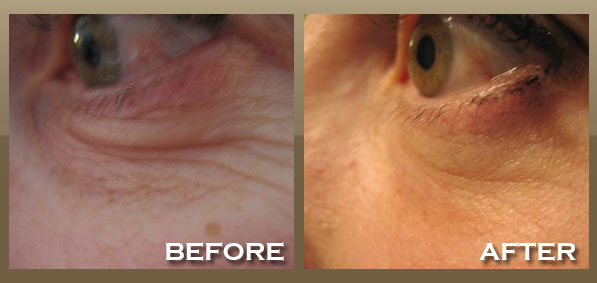
CO2 and Erbium Ablative Laser Resurfacing has been the “Gold Standard” for facial rejuvenation, photo aging and wrinkle removal since 1995. Ablative laser resurfacing, using the Palomar 2940 Erbium Laser, can achieve very significant facial rejuvenation including wrinkle removal, skin tightening and hyperpimentation. There is some downtime associated with an Ablative Fractional Laser treatment. Patients should expect excellent results after one weeks worth of recovery time.
No time for downtime? Non-ablative treatments are an excellent alternative for removing wrinkles and improving skin texture. Since it is less aggressive than the Ablative Laser treatments, patients need multiple treatments but are only slightly pick and swollen after the treatment. The swelling and pink color usually subside in a few days. The non-ablative fractional treatment is considered a no down time procedure as you can go back to work after the treatment.
The fractional lasers are the main lasers used throughout the country for the treatment of acne scars. Fractional skin tightening works well and generally patients see their acne scars improved by a considerable degree after the treatment(s).
Fractional Skin Tightening Videos of Dr. Darvish on ehow.com
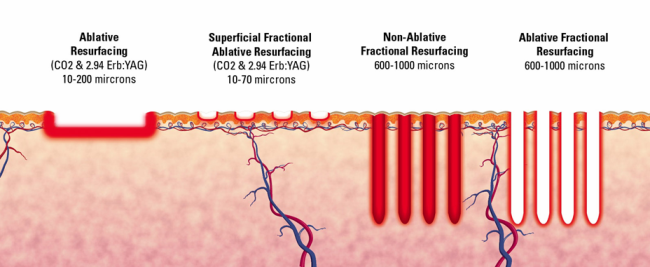
Different Fractional Technologies
In the above drawing, the first red area on the left represents traditional ablative CO2 and Erbium laser resurfacing. To ablate means to surgically remove and the skin tissue is removed by the heat of the CO2 or Erbium laser. Since these lasers were not fractional, all of the skin in the treated area is removed creating an open wound that takes a long time to heal. There are few doctors that do this now because there are concerns about long term scarring that can occur.
The second drawing from the left respresents a fractional laser that ablates the surface of the skin down to a depth of 70-100 microns. This treatment allows the skin to heal much more quickly, but depth of penetration is not deep enough to produce noticeable wrinkle reduction or texture improvement.
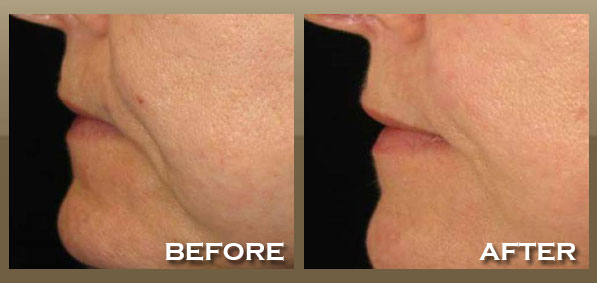
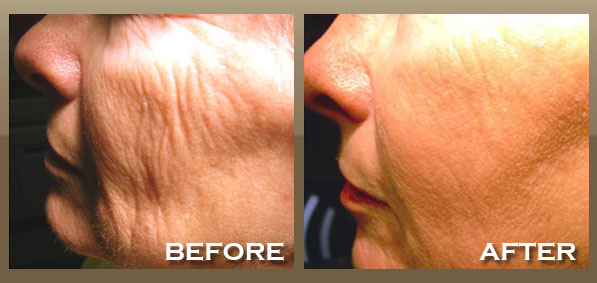
Fractional Skin Tightening FAQ
A: The Fractionated Laser Treatment (FLT) is an innovative, non-invasive laser therapy designed to dramatically repair fine lines, wrinkles, and acne scars while improving skin texture and pigmentation - even on delicate skin. It is a proven, safe approach to repairing aging and sun-damaged skin, with many of the benefits of ablative laser skin resurfacing (resurfacing the skin by removing it or vaporizing it), but without the downtime, side effects, and lengthy recovery periods.
A: Think of your skin as a family portrait or digital photograph in need of high-quality restoration or touch up. Just as a damaged painting is delicately restored one small area at a time, or a photographic image is altered, pixel by pixel, FLT improves your appearance by affecting only a fraction of your skin at a time with thousands of tiny microscopic laser spots.
A: A novel approach to laser skin treatment, the Fractionated laser represents a new science and category of cosmetic skin surgery that offers patients the positive results of ablative laser resurfacing with the low-impact benefits of non-ablative laser or light-based therapies. Unlike the often prolonged healing involved with ablative lasers that remove the top layer of skin, the FLT procedure produces tiny, microscopic sites of thermal impact separated by areas of unaffected, healthy tissue. The spared healthy tissue between treatment zones contains viable cells that promote rapid healing of the outer skin layers.
A: The first step is to thoroughly cleanse the skin. Then, to help highlight and contour the skin, a water-soluble tint called OptiGuide Blue is applied to the treatment area. A topical anesthetic may also be applied to provide more comfort during the procedure.
A: A typical treatment regime consists of between three to six sessions, which are approximately 30 minutes long, and spread one to three weeks apart.
A: After your very first Fractionated Laser Treatment, you will begin to feel the difference in your skin, as it gradually becomes softer, smoother and fresher. Fine lines around your eyes will noticeably fade. So will uneven coloring and the brown spots caused by aging, acne, melasma and sun exposure.
A: Wrinkles, uneven texture, large pores, sun spots, brown spots, scars, Melasma, and hyper-pigmentation can be treated successfully with the Fractionated laser treatments. Optimal improvement is usually visible in about two to three months.
A: The Fractionated Laser Treatment offers speedy healing and no downtime. Side effects are minimal and usually limited to a sunburn-like redness that disappears anywhere from an hour to a day or two depending on what level of treatment you have received. Discomfort fades quickly, but the skin may maintain a bronzed or pinkish tone for five to seven days. The pinkish color is a signal that the skin is healing and that there is adequate blood circulation to the dermal tissue. You may also experience some mild swelling for up to three days. As the new epidermal tissue replaces the damaged tissue, your skin will flake off. This is an excellent sign that your body is replacing the treated tissue with new skin cells. Moisturizer can counteract some of the flaking effect.
A: The third areas from the left represents the Palomar 1540 non ablative fractional laser which heats but does not ablate the skin. This lasers uses an Erbium laser to heat small columns of the deep skin layers to encourage new collagen production and plump up the skin and improve skin wrinkles. The recovery time is less than with ablative fractional technologies and patients generally are pink and swollen in the treatment area for 1 to 3 days after the treatment. These lasers are excellent for improving skin texture, plumping wrinkles and acne scars, and shrinking pores, but multiple treatments are required. The last column on the right of the above diagram represents fractional ablative lasers. These lasers remove the heated column of skin tissue and provide more substantial wrinkle removal and superficial skin tightening than the non ablative fractional lasers. The Palomar® Lux2940 laser used at Skinpeccable is one of the most aggressive wrinkle lasers available. This laser provides better wrinkle removal and skin rejuvenation than the non-ablative fractional lasers, but with added downtime. After a treatment with an ablative laser, patients should expect to a week of downtime in which the skin is healing and is red.
Avoid Retin-A, Affirm, Differin, Tazorac, Benzoyl Peroxide, Glycolic Acid, Alpha Hydroxy, Salicylic Acid, Astringents, Toners, Renova, and Prevage on treated area(s) for a minimum of 7 days after treatment and seven days before next treatment.
- Avoid sun exposure in the area to be treated for at least 3 weeks prior to your next treatment
- Avoid sun tanning, tanning beds, and tanning creams
- Men: Shave beard hair in area to be treated
- Wear sunscreen (SPF 30 or greater) recommended by your Skinpeccable provider
- Remove make-up, deodorants, and lotions.
- If getting treated on the face and you have a history of cold sores, take cold sore medicine (eg. Valtrex) as directed by the physician.
- You have been in the sun, have visited a tanning bed, or are using tanning creams
- You have started oral antibiotics (Minocycline, Tetracycline, etc.) or Accutane
- You have started Retin-A, Affirm, Differin, Tazorac, or Renova on the areas to be treated
- You are pregnant or are unsure if you are pregnant
- You have an active cold sore. An active cold sore is a contraindication to laser treatments on the face.
SPECIALS
